
LESSON 05: MY PLANS

Let’s talk about your plans! 📅🎒
🎯 WHAT WILL YOU LEARN?
By the end of this lesson, you will be able to:
- talk about your plans and intentions
- use be going to to talk about future plans
- make affirmative and negative sentences about your plans
- ask and answer questions about future plans
- talk about arrangements using the Present Continuous
- describe your plans for the weekend or holidays
Ready? Let’s make some plans! 🚀
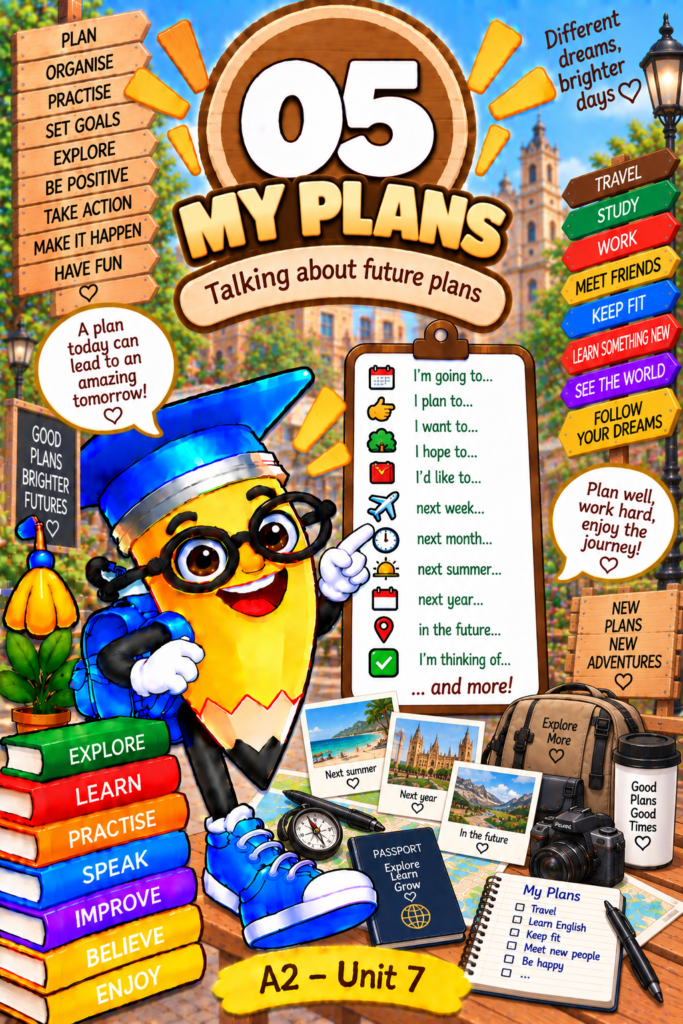
📅 MY PLANS
We often make plans for the future: things we want to do, places we want to visit or activities we want to enjoy.
One useful way to talk about plans is be going to + verb.
BE GOING TO
| Person | Example |
|---|---|
| I | I am going to visit my cousin. |
| you | You are going to play football. |
| he / she / it | She is going to study tonight. |
| we | We are going to watch a film. |
| they | They are going to travel by train. |
Remember: am / is / are + going to + verb.

🎒 WHAT ARE YOU GOING TO DO?
Use going to to talk about plans and intentions.
- I am going to play tennis.
- My sister is going to meet her friends.
- We are going to visit our grandparents.
- They are going to have a picnic.
You can add a time expression to say when your plan is going to happen:
- tomorrow
- this afternoon
- tonight
- this weekend
- next week
- next summer
Example: I’m going to visit my grandparents this weekend.
❌ I’M NOT GOING TO…
We can also use not to talk about plans we do not have.
| Affirmative | Negative |
|---|---|
| I am going to swim. | I am not going to swim. |
| He is going to play. | He is not going to play. |
| We are going to travel. | We are not going to travel. |
Example: It’s raining, so we aren’t going to play football today.
❓ ARE YOU GOING TO…?
To ask about someone’s plans, we put am, is or are before the person.
| Question | Short answer |
|---|---|
| Are you going to study tonight? | Yes, I am. / No, I’m not. |
| Is she going to come with us? | Yes, she is. / No, she isn’t. |
| Are they going to play football? | Yes, they are. / No, they aren’t. |
You can also ask What are you going to do?
A: What are you going to do this weekend?
B: I’m going to visit my grandparents.
📆 PLANS IN YOUR CALENDAR
Sometimes we talk about a future arrangement using the Present Continuous, especially when the plan is already organised.
| Plan | Example |
|---|---|
| meeting a friend | I’m meeting Leo on Saturday. |
| visiting a place | We’re visiting the museum tomorrow. |
| going somewhere | She’s going to Madrid on Friday. |
| playing a sport | They’re playing tennis this afternoon. |
At A2 level, you can use both forms to talk about future plans. Don’t worry about complicated differences yet. The important thing is to communicate your plan clearly.
🌟 MY WEEKEND PLAN
Read about Alex’s plans.
Hi! I’m Alex. This weekend is going to be great!
On Saturday morning, I’m going to play basketball with my friends. In the afternoon, I’m meeting my cousin in town. We’re going to have lunch together and then we’re going to go shopping.
On Sunday, I’m going to stay at home in the morning because I have some homework to do. In the afternoon, my family and I are going to visit my grandparents.
I’m not going to play computer games on Sunday because I want to spend time with my family. I think it’s going to be a fun weekend!
🔎 CHECK YOUR UNDERSTANDING
- What is Alex going to do on Saturday morning?
- Who is Alex meeting on Saturday afternoon?
- What are they going to do in town?
- Why is Alex going to stay at home on Sunday morning?
- Who is Alex visiting on Sunday afternoon?
- Is Alex going to play computer games on Sunday?
- What does Alex think about the weekend?
🗓️ MAKE YOUR PLANS
Imagine your plans for next weekend. Complete the sentences.
- On Saturday morning, I’m going to __________________.
- On Saturday afternoon, I’m going to __________________.
- On Saturday evening, I’m going to __________________.
- On Sunday morning, I’m going to __________________.
- On Sunday afternoon, I’m going to __________________.
- I’m not going to __________________.
Now write 6–8 sentences about your plans for next weekend.
💬 ASK A FRIEND
Use these questions to talk about future plans:
- What are you going to do this weekend?
- Are you going to go anywhere?
- Who are you going to meet?
- Are you going to play any sports?
- What are you going to do on Sunday?
Remember: Let’s Speak is for practice. You don’t need to worry about getting every sentence perfect!
🏆 A2 CHALLENGE
My Perfect Weekend
Create a plan for your perfect weekend.
- include Saturday and Sunday
- use at least 5 sentences with going to
- include at least one negative sentence
- mention three different activities
- mention at least one person you are going to meet
- use at least three time expressions
Example: On Saturday morning, I’m going to play football with my friends. In the afternoon, I’m going to go shopping with my sister. In the evening, we’re going to watch a film. On Sunday morning, I’m going to have breakfast with my family. In the afternoon, I’m meeting my cousin. I’m not going to do any homework on Sunday evening!
🎮 GAMES — MY PLANS
Practise what you’ve learned! Try these games and practise talking about future plans.
¿Qué significa “be going to”?
Usamos be going to + verbo para hablar de planes e intenciones futuras: I’m going to visit my aunt.
¿Tengo que decir siempre “going to”?
No. En esta lección lo practicamos mucho porque es una forma muy útil de hablar de planes. También puedes encontrar el Present Continuous para planes ya organizados.
¿Es “I going to” correcto?
No. Necesitas el verbo to be: I am going to…, you are going to…, she is going to….
¿Qué verbo pongo después de “going to”?
Usamos el verbo en su forma básica: going to play, going to visit, going to study.
¿Cómo pregunto por los planes de otra persona?
Puedes preguntar What are you going to do? o utilizar preguntas como Are you going to play football?
¿Puedo usar “going to” con “tomorrow” o “next week”?
Sí. Es muy habitual: I’m going to see my friend tomorrow. / We’re going to travel next week.
¿Cuál es la diferencia entre “going to” y el Present Continuous?
Ambos pueden hablar de planes futuros. En esta lección, going to es la forma principal para expresar planes e intenciones. El Present Continuous aparece especialmente cuando el plan ya está organizado: I’m meeting Tom on Saturday.
📥 Fichas descargables

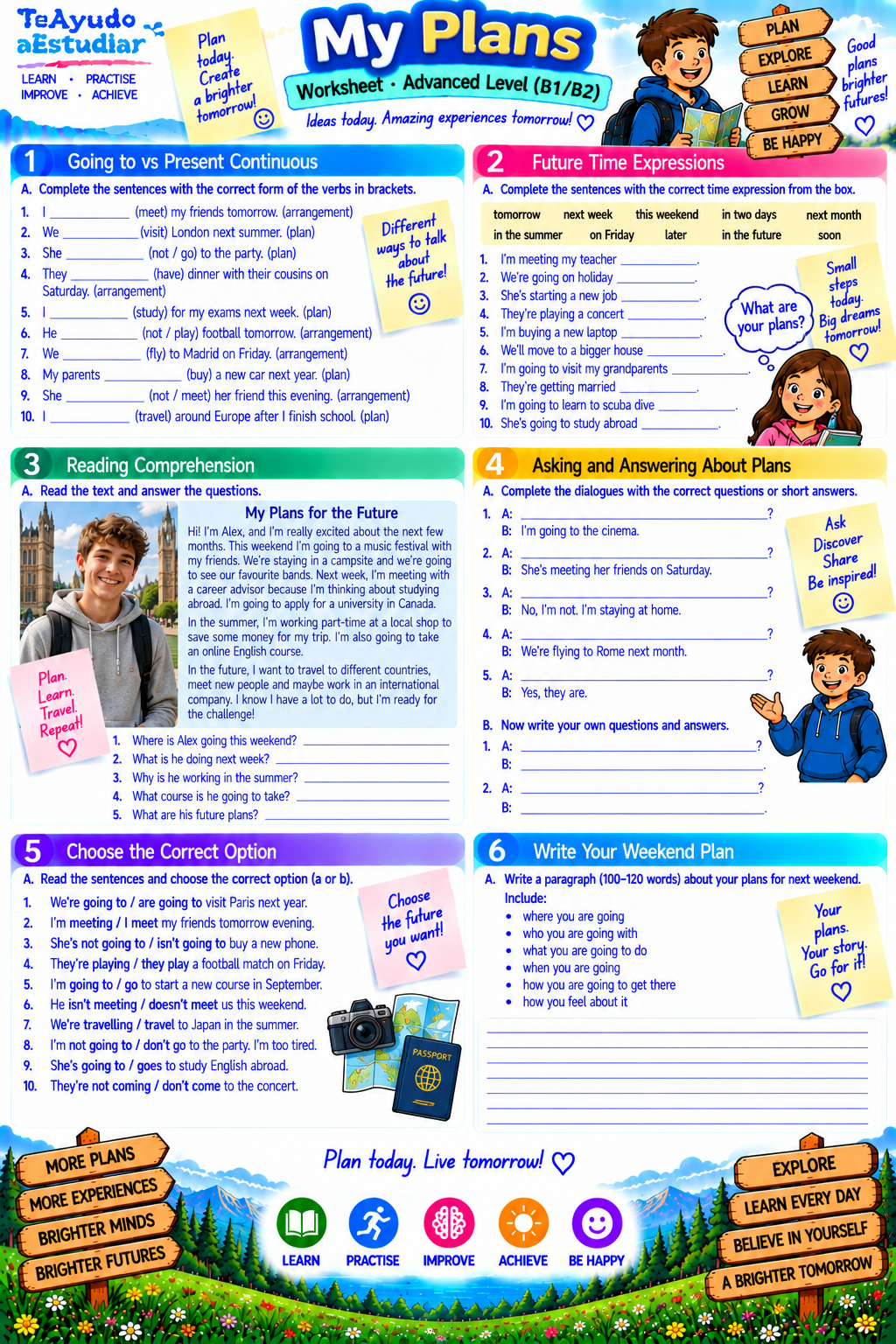
📝 Resumen
En esta lección de inglés A2 aprenderás a hablar sobre planes e intenciones futuras. Practicarás principalmente la estructura be going to + verbo para expresar lo que tienes pensado hacer, además de preguntas y respuestas sobre planes. También verás cómo podemos utilizar el Present Continuous para hablar de algunos planes ya organizados. Con ejemplos, una lectura original, actividades y juegos podrás hablar de tus planes para el fin de semana, las vacaciones y otras situaciones cotidianas.
Recursos Premium Próximamente
Materiales más completos para aprender, practicar y avanzar.
Descubre nuestros cuadernos, packs de fichas y materiales exclusivos, creados para profundizar en cada asignatura y trabajar de forma autónoma.
Cuadernos educativos
Teoría, ejercicios y actividades organizadas para aprender paso a paso
Desde 4.90 €
Packs de fichas
Cientos de fichas listas para imprimir, organizadas por asignaturas y cursos.
Desde 1.99 €
Recursos Premium
Material exclusivo de refuerzo y exámenes con soluciones
Desde 1.99 €
¿Quieres aprender más rápido?
Suscríbete gratis a nuestra newsletter con el código QR o haciendo clic en el botón rojo y recibe recursos educativos, ejercicios, exámenes…
Sin spam. Cancela cuando quieras.

TeAyudoAEstudiar
Plataforma educativa para Primaria, ESO y docentes.
Asignaturas
Matemáticas
Inglés
Lengua
Ciencias Sociales
Recursos
Fichas
Exámenes
Juegos educativos
Recursos Premium
Empresa
Sobre nosotros
Aviso legal
Privacidad
Contacto
© 2026 TeAyudoAEstudiar · Todos los derechos reservados.
Creado por docentes🧡 para ayudarte a aprender.