
LESSON 02: HOW DO YOU FEEL?

Let’s talk about feelings and emotions! 😊
🎯 WHAT WILL YOU LEARN?
By the end of this lesson, you will be able to:
- talk about how you feel
- use common words for feelings and emotions
- say when you feel happy, sad, worried or excited
- ask and answer How do you feel?
- say why you feel a certain way
- describe how you feel in different situations
Ready? Let’s talk about your feelings! 😊
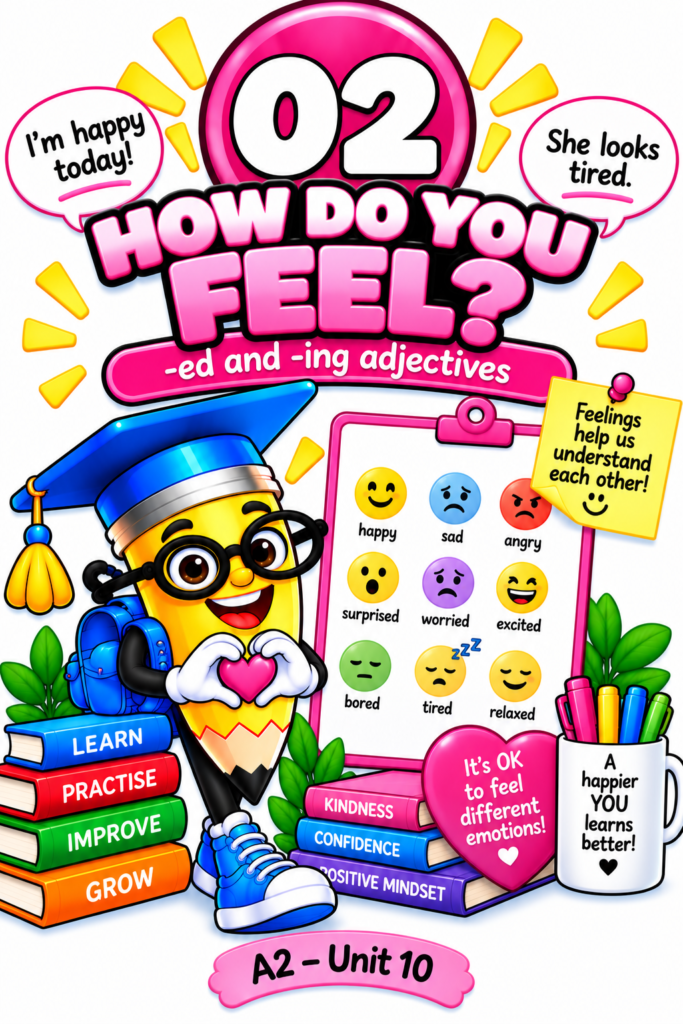
😊 FEELINGS & EMOTIONS
We all have different feelings every day. Here are some useful words to talk about how you feel.
| Feeling | Meaning | Example |
|---|---|---|
| happy | feeling good | I am happy today. |
| sad | not happy | She is sad. |
| angry | feeling mad | He is angry. |
| tired | needing rest | I am tired after school. |
| excited | very happy about something | We are excited about the trip. |
| worried | thinking that something bad may happen | She is worried about the test. |
| bored | not interested in what you are doing | He is bored at home. |
| scared | feeling afraid | The child is scared. |
| surprised | feeling something unexpected | I am surprised! |
| proud | happy about something you did | My parents are proud of me. |
💬 HOW DO YOU FEEL?
To ask about someone’s feelings, we can say:
| Question | Possible answer |
|---|---|
| How do you feel? | I feel happy. |
| How do you feel today? | I feel tired. |
| How are you feeling? | I’m a little worried. |
| Are you OK? | Yes, I’m fine. / Not really. |

🎯 FEELINGS IN DIFFERENT SITUATIONS
We can use feelings to talk about different situations.
| Situation | Feeling | Example |
|---|---|---|
| You win a competition. | excited / proud | I am proud of my team. |
| You have a big test tomorrow. | worried | I’m worried about the test. |
| Your best friend visits you. | happy | I’m very happy! |
| You have nothing to do. | bored | I’m bored. |
| You hear a strange noise at night. | scared | I’m scared. |
| You don’t sleep well. | tired | I’m tired today. |
❓ WHY DO YOU FEEL THAT WAY?
We can give a simple reason with because.
- I’m happy because it’s my birthday.
- I’m tired because I didn’t sleep well.
- She’s excited because she’s going on holiday.
- He’s worried because he has a test tomorrow.
📖 A SURPRISE FOR LEO
Leo is at school today. He looks very happy because it is his birthday.
At break time, his friends call him to the playground. Leo is surprised. There is a big box on the table. His friends have a birthday present for him!
Leo opens the box and finds a new football. He is very excited. He loves football and he is proud of his friends.
Later, Leo has a maths test. He feels a little worried because he doesn’t like tests very much. His friend Emma says, “Don’t worry, Leo. You can do it!”
At the end of the day, Leo is tired but very happy. It has been a great birthday!
🔎 UNDERSTAND THE STORY
- Why is Leo happy at the beginning?
- Why is Leo surprised?
- What is inside the box?
- Why does Leo feel worried later?
- How does Leo feel at the end of the day?
✏️ YOUR FEELINGS
Complete the sentences with your own ideas.
- I feel happy when ____________________.
- I feel excited when ____________________.
- I feel worried when ____________________.
- I feel tired when ____________________.
- I feel proud when ____________________.
🗣️ ASK A FRIEND
Ask a friend these questions and compare your answers.
- How do you feel today?
- What makes you happy?
- When do you feel excited?
- What makes you worried?
🏆 A2 CHALLENGE
Choose three different situations and write a sentence about how you feel in each one. Give a reason using because.
Example: I feel excited because I’m going on holiday.
🎮 GAMES
Practise what you’ve learned! Try these games and practise feelings and emotions.
¿Cómo pregunto a alguien cómo se siente?
Puedes decir How do you feel?, How are you feeling? o, en una situación cotidiana, Are you OK?
¿Cuál es la diferencia entre “I am happy” e “I feel happy”?
Las dos frases son correctas y significan que estás feliz. I am happy es muy frecuente para describir tu estado.
¿Cómo digo que estoy preocupado?
Usamos worried: I’m worried about the test.
¿Qué significa excited?
Significa estar muy contento o ilusionado por algo que va a ocurrir: I’m excited about the trip!
¿Cuál es la diferencia entre scared y worried?
Scared se relaciona con el miedo. Worried se relaciona con estar preocupado porque algo puede salir mal.
¿Cómo explico por qué me siento así?
Usa because: I’m happy because it’s my birthday.
¿Tengo que aprender todas las palabras de sentimientos?
No. Empieza por las más frecuentes y practica usándolas en situaciones reales.
📥 Fichas descargables

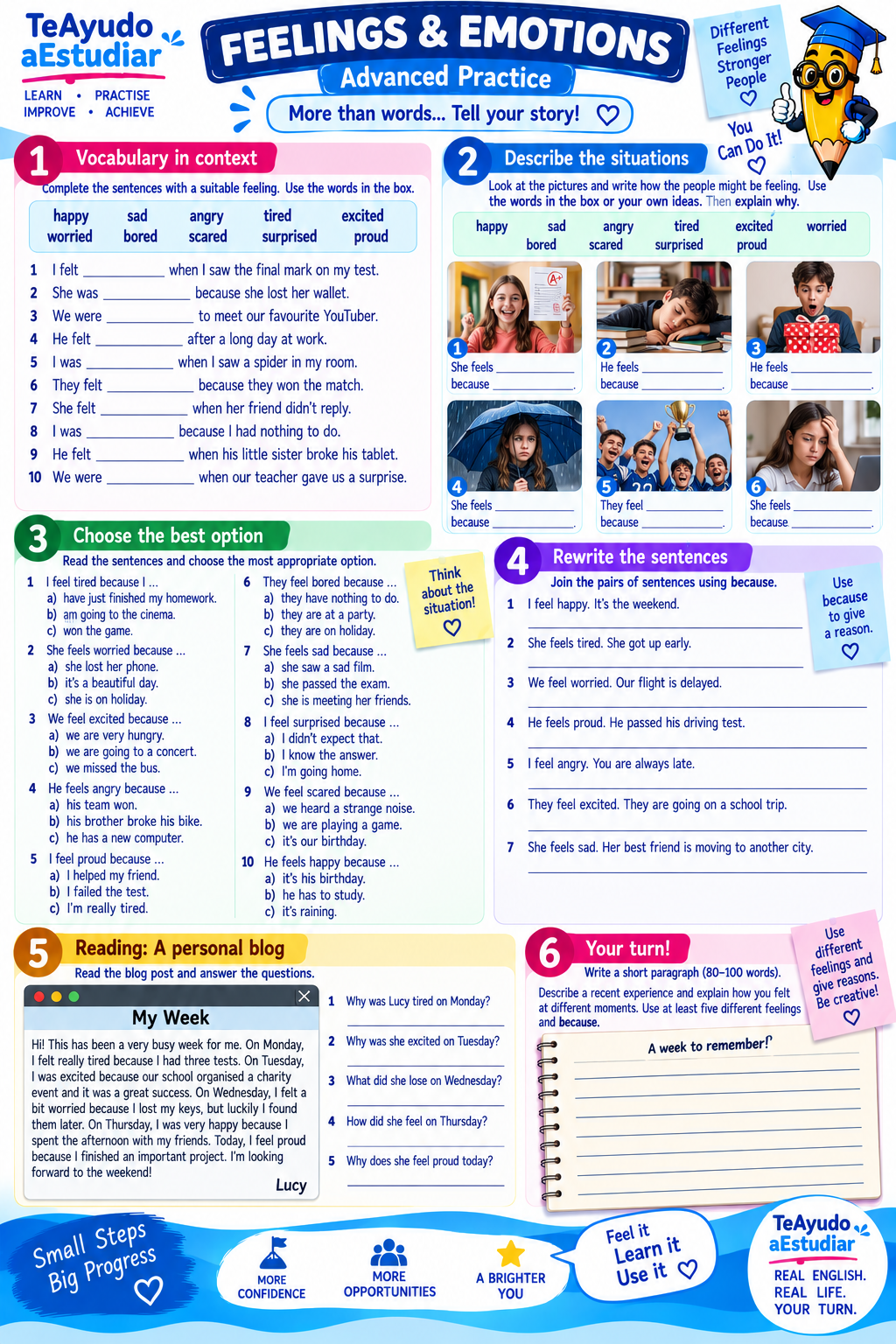
📝 Resumen
En esta lección de inglés A2 has aprendido a hablar de feelings and emotions y a explicar cómo te sientes en diferentes situaciones. Has practicado palabras como happy, sad, tired, excited, worried, bored, scared y proud, además de preguntas como How do you feel? y expresiones para explicar el motivo de una emoción con because. Ahora puedes describir de forma sencilla cómo te sientes y preguntar a otras personas por sus emociones.
Recursos Premium Próximamente
Materiales más completos para aprender, practicar y avanzar.
Descubre nuestros cuadernos, packs de fichas y materiales exclusivos, creados para profundizar en cada asignatura y trabajar de forma autónoma.
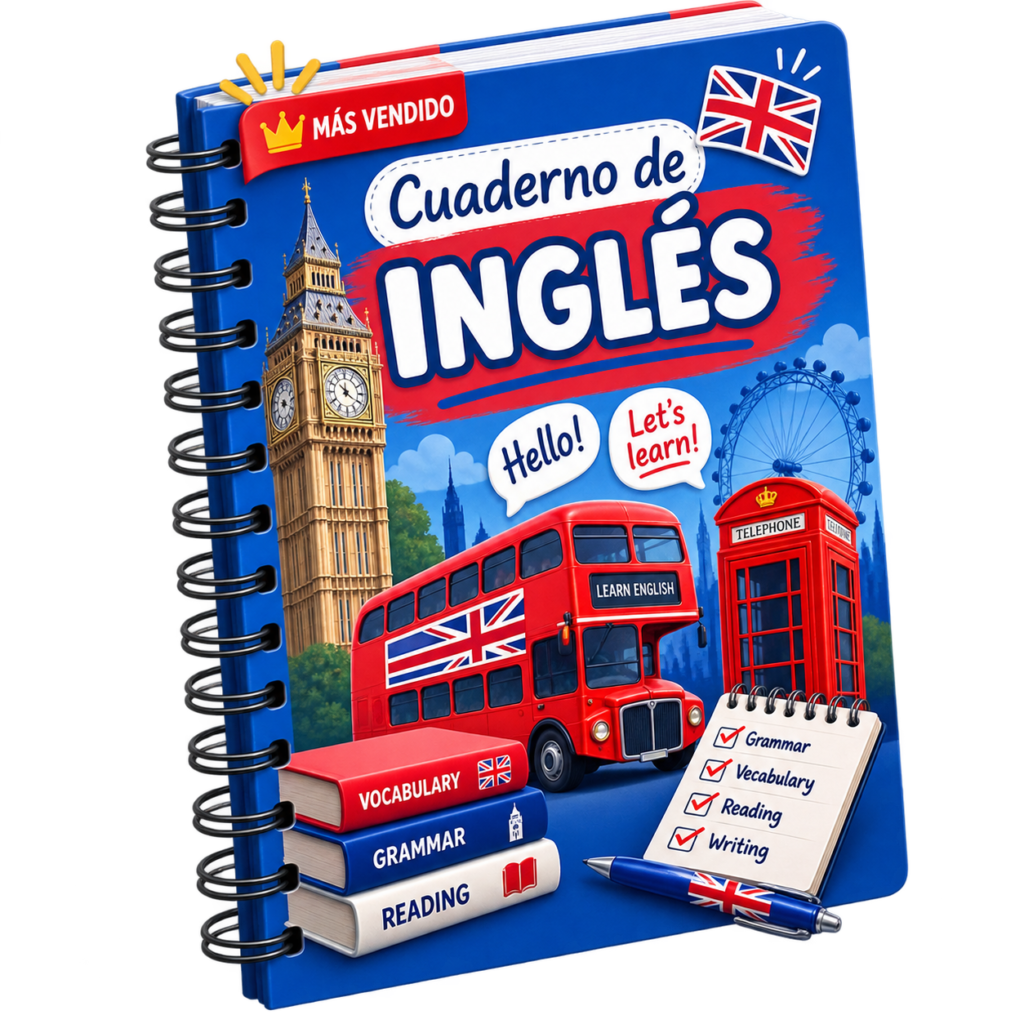
Cuadernos educativos
Teoría, ejercicios y actividades organizadas para aprender paso a paso
Desde 4.90 €
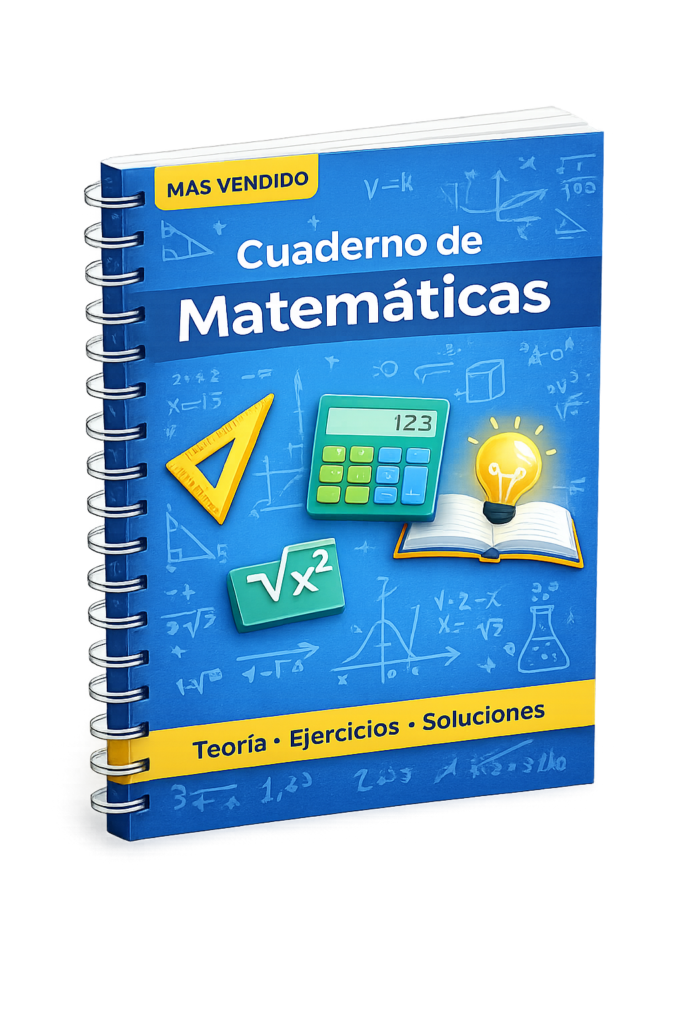
Packs de fichas
Cientos de fichas listas para imprimir, organizadas por asignaturas y cursos.
Desde 1.99 €
Recursos Premium
Material exclusivo de refuerzo y exámenes con soluciones
Desde 1.99 €
¿Quieres aprender más rápido?
Suscríbete gratis a nuestra newsletter con el código QR o haciendo clic en el botón rojo y recibe recursos educativos, ejercicios, exámenes…
Sin spam. Cancela cuando quieras.

TeAyudoAEstudiar
Plataforma educativa para Primaria, ESO y docentes.
Asignaturas
Matemáticas
Inglés
Lengua
Ciencias Sociales
Recursos
Fichas
Exámenes
Juegos educativos
Recursos Premium
Empresa
Sobre nosotros
Aviso legal
Privacidad
Contacto
© 2026 TeAyudoAEstudiar · Todos los derechos reservados.
Creado por docentes🧡 para ayudarte a aprender.