LESSON 06: WHAT WAS HAPPENING?

Let’s talk about what was happening! 👀
🎯 WHAT WILL YOU LEARN?
By the end of this lesson, you will be able to:
- talk about actions that were happening at a particular moment in the past
- use the Past Continuous in simple sentences
- use was and were correctly
- use verbs with -ing to describe actions in progress
- ask and answer simple questions about what people were doing
- talk about abilities in the present and the past with can and could
Ready? Let’s see what was happening! 👀
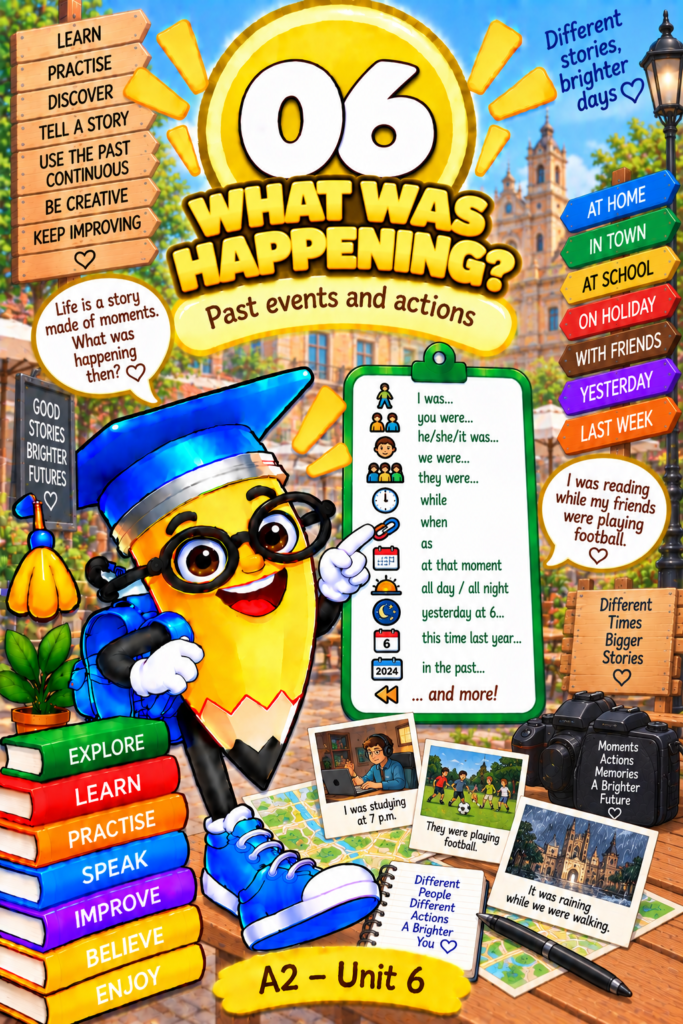
👀 WHAT WAS HAPPENING?
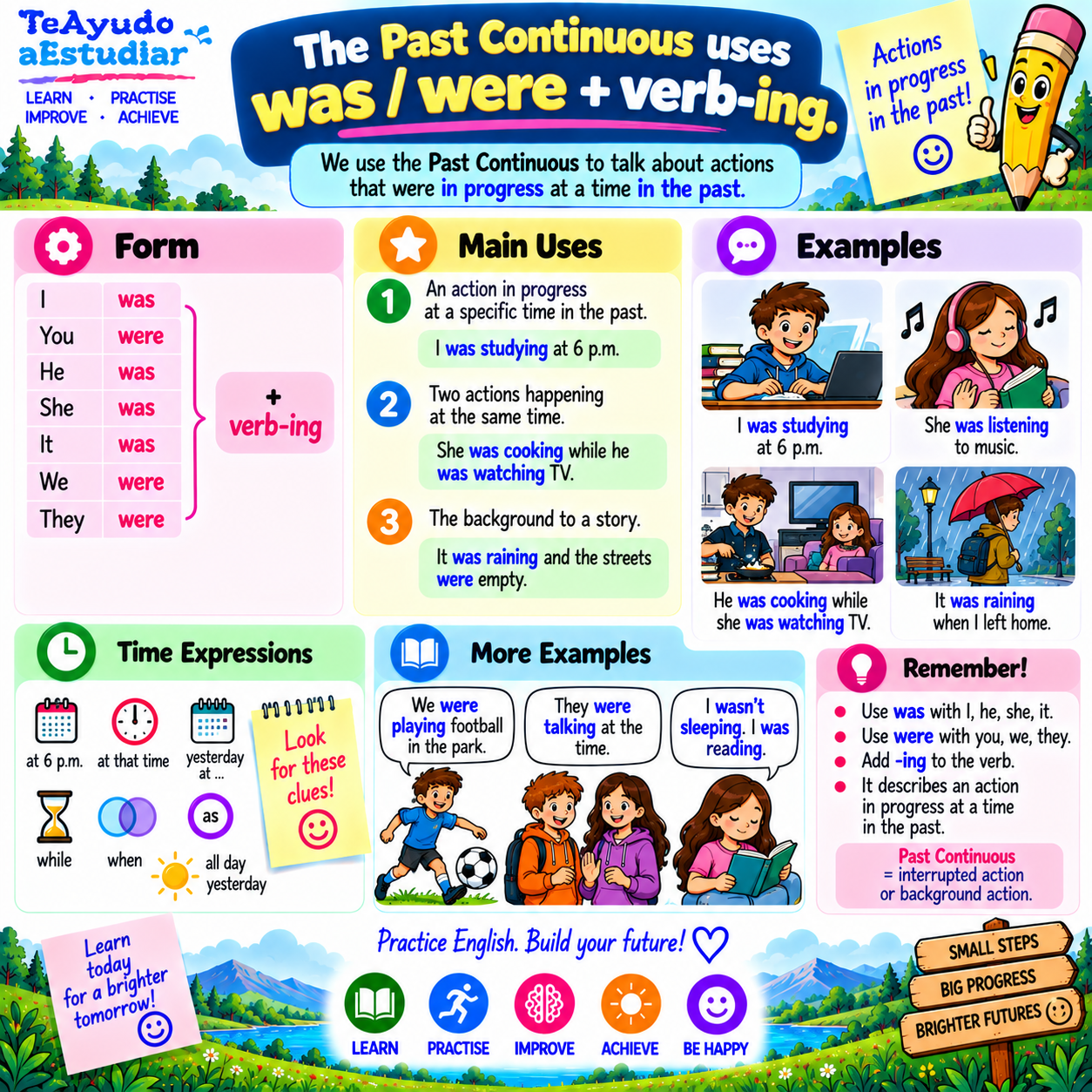
We use the Past Continuous to talk about an action that was happening at a particular moment in the past.
- At six o’clock, I was doing my homework.
- She was watching TV at eight o’clock.
- They were playing football in the afternoon.
- We were having dinner at seven.
Think of the Past Continuous as a picture of an action in progress at a moment in the past. 📸
🧩 WAS OR WERE?
The Past Continuous uses was / were + verb-ing.
| Subject | Past Continuous | Example |
|---|---|---|
| I | was + verb-ing | I was reading. |
| He | was + verb-ing | He was sleeping. |
| She | was + verb-ing | She was cooking. |
| It | was + verb-ing | It was raining. |
| You | were + verb-ing | You were studying. |
| We | were + verb-ing | We were talking. |
| They | were + verb-ing | They were playing. |
Easy trick: I / he / she / it → was and you / we / they → were.
✏️ LET’S ADD -ING!
To make the Past Continuous, we need the -ing form of the verb.
| Verb | Verb + -ing | Example |
|---|---|---|
| play | playing | They were playing. |
| watch | watching | She was watching TV. |
| read | reading | I was reading. |
| cook | cooking | He was cooking. |
| run | running | We were running. |
| swim | swimming | She was swimming. |
| write | writing | I was writing. |
| make | making | They were making a cake. |
❓ WHAT WERE THEY DOING?
We can use the Past Continuous to describe what people were doing at a particular moment.
- At five o’clock, Emma was doing her homework.
- Her brother was playing a video game.
- Their parents were cooking dinner.
- The dog was sleeping under the table.
🚫 WHAT WASN’T HAPPENING?
For negative sentences, use wasn’t / weren’t + verb-ing.
- She wasn’t sleeping. 🚫
- He wasn’t watching TV. 🚫
- We weren’t playing outside. 🚫
- They weren’t studying. 🚫
❓ WAS SHE…?
We can ask questions with Was or Were.
| Question | Short answer |
|---|---|
| Was she cooking? | Yes, she was. / No, she wasn’t. |
| Was he playing football? | Yes, he was. / No, he wasn’t. |
| Were they watching TV? | Yes, they were. / No, they weren’t. |
| Were you studying? | Yes, I was. / No, I wasn’t. |
🕐 AT A MOMENT IN THE PAST
We often use the Past Continuous with a specific time in the past.
| Time expression | Example |
|---|---|
| at six o’clock | I was having dinner at six o’clock. |
| at eight o’clock | She was reading at eight o’clock. |
| yesterday afternoon | We were playing yesterday afternoon. |
| last night | They were watching a film last night. |
📖 A BUSY EVENING
Read about what was happening in Emma’s house yesterday evening.
Yesterday evening, Emma was at home with her family.
At six o’clock, Emma was doing her homework in her bedroom. Her brother Leo was playing a video game in the living room. Their mum was cooking dinner in the kitchen, and their dad was reading a book.
At half past six, Leo was still playing his game. Emma was talking to her friend on the phone. Their dog was sleeping near the sofa.
At seven o’clock, the family was having dinner together. Everyone was talking and laughing. It was a busy but happy evening!
🔎 CHECK YOUR UNDERSTANDING
- Where was Emma at six o’clock?
- What was Emma doing?
- What was Leo doing?
- What was Mum doing?
- What was Dad doing?
- Who was sleeping near the sofa?
- What was the family doing at seven o’clock?
- How was the evening?
💬 CAN, CAN’T, COULD & COULDN’T
We can also use these verbs to talk about what someone can or could do.
| Verb | Use | Example |
|---|---|---|
| can | ability now | I can swim. |
| can’t | no ability now | I can’t drive. |
| could | ability in the past | I could swim when I was six. |
| couldn’t | no ability in the past | I couldn’t swim when I was four. |
After can, can’t, could and couldn’t, use the base form of the verb.
- I could swim. ✅
- I could swam. ❌
- She couldn’t ride a bike. ✅
- She couldn’t rode a bike. ❌
🗣️ WHAT WERE YOU DOING?
Think about yesterday. Complete the sentences with your own ideas.
- At 5 o’clock, I was __________________.
- At 6 o’clock, I was __________________.
- At 7 o’clock, I was __________________.
- At 8 o’clock, I was __________________.
- Yesterday evening, I was __________________.
Challenge: Write 8–10 sentences describing what you and your family were doing at different times yesterday.
🏆 A2 CHALLENGE
A picture from the past!
Imagine that you have a photo of your family at home yesterday afternoon. Describe what everyone was doing.
- use at least 5 Past Continuous sentences
- use both was and were
- include at least one negative sentence
- use at least three different verbs
- say where the people were
- say what they were doing
Example: At four o’clock, my mum was cooking in the kitchen. My dad was reading in the living room. My sister and I were playing in the garden. Our dog was sleeping under the table. We weren’t watching TV because we were outside.
🎮 GAMES — WHAT WAS HAPPENING?
Practise what you’ve learned! Try these games and practise the Past Continuous and past abilities.
¿Cuándo usamos el Past Continuous?
Lo usamos para hablar de una acción que estaba ocurriendo en un momento concreto del pasado: At seven o’clock, I was having dinner.
¿Cuándo usamos was y cuándo were?
Usamos was con I, he, she, it y were con you, we, they.
¿Cómo hago una frase negativa?
Usamos wasn’t / weren’t + verbo-ing: He wasn’t sleeping. / They weren’t studying.
¿Cómo hago una pregunta?
Colocamos was o were delante del sujeto: Was she cooking? / Were they playing?
¿Qué diferencia hay entre can y could?
Can habla de una capacidad en el presente y could de una capacidad en el pasado: I can swim. / I could swim when I was six.
¿Después de could usamos el verbo en pasado?
No. Después de could y couldn’t usamos el verbo en su forma base: I could swim.
¿Tengo que aprender muchas reglas nuevas?
No. Para esta lección, recuerda principalmente esta estructura: was / were + verb-ing.
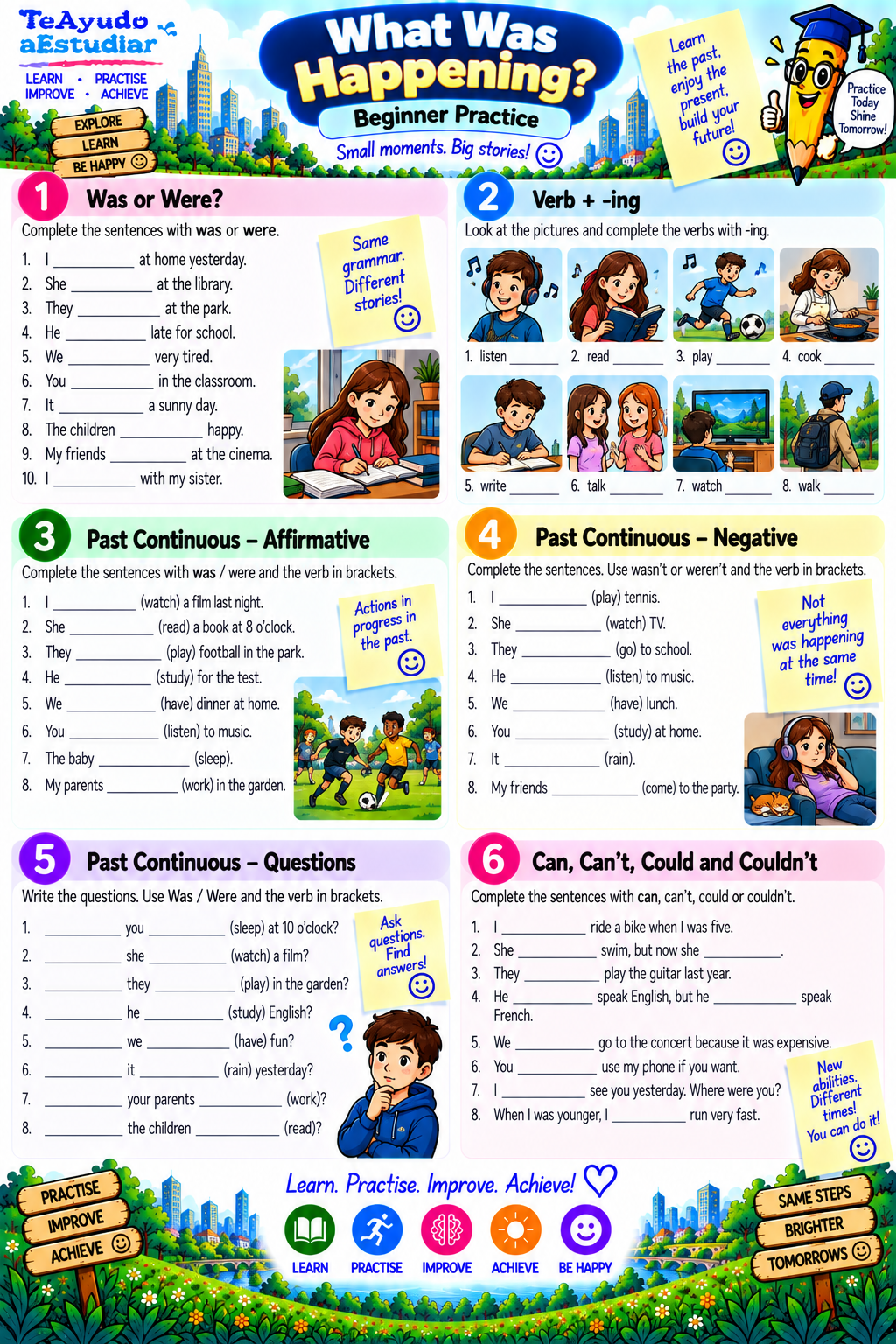
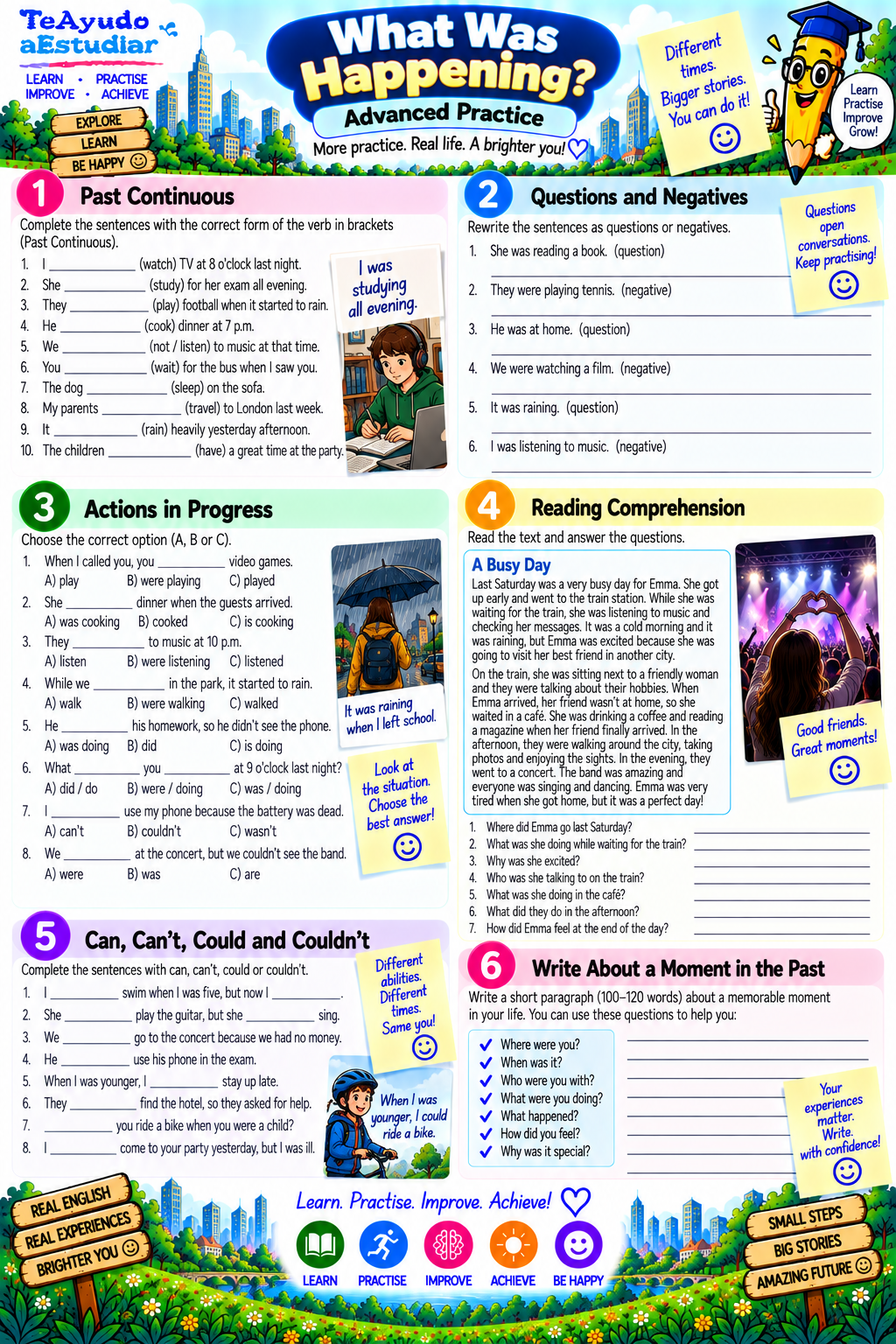
📥 Fichas descargables
📝 Resumen
En esta lección de inglés A2 aprenderás a hablar de acciones que estaban ocurriendo en un momento concreto del pasado utilizando el Past Continuous. Practicarás la estructura was / were + verbo-ing, las formas afirmativas, negativas e interrogativas y expresiones de tiempo relacionadas con momentos del pasado. También aprenderás a utilizar can, can’t, could y couldn’t para hablar de capacidades en el presente y en el pasado. A través de ejemplos, una lectura original, juegos y actividades de producción, podrás describir qué estaba haciendo cada persona en una situación determinada.
Recursos Premium Próximamente
Materiales más completos para aprender, practicar y avanzar.
Descubre nuestros cuadernos, packs de fichas y materiales exclusivos, creados para profundizar en cada asignatura y trabajar de forma autónoma.
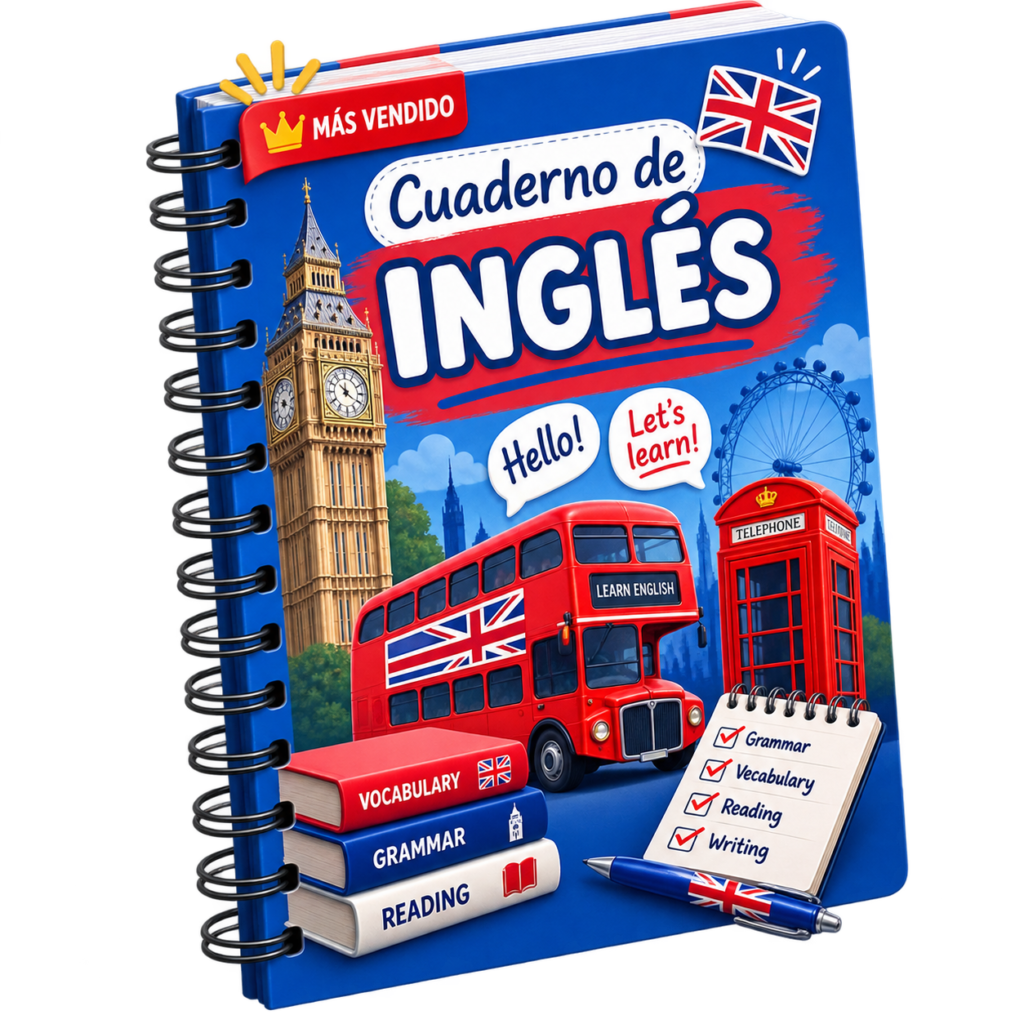
Cuadernos educativos
Teoría, ejercicios y actividades organizadas para aprender paso a paso
Desde 4.90 €
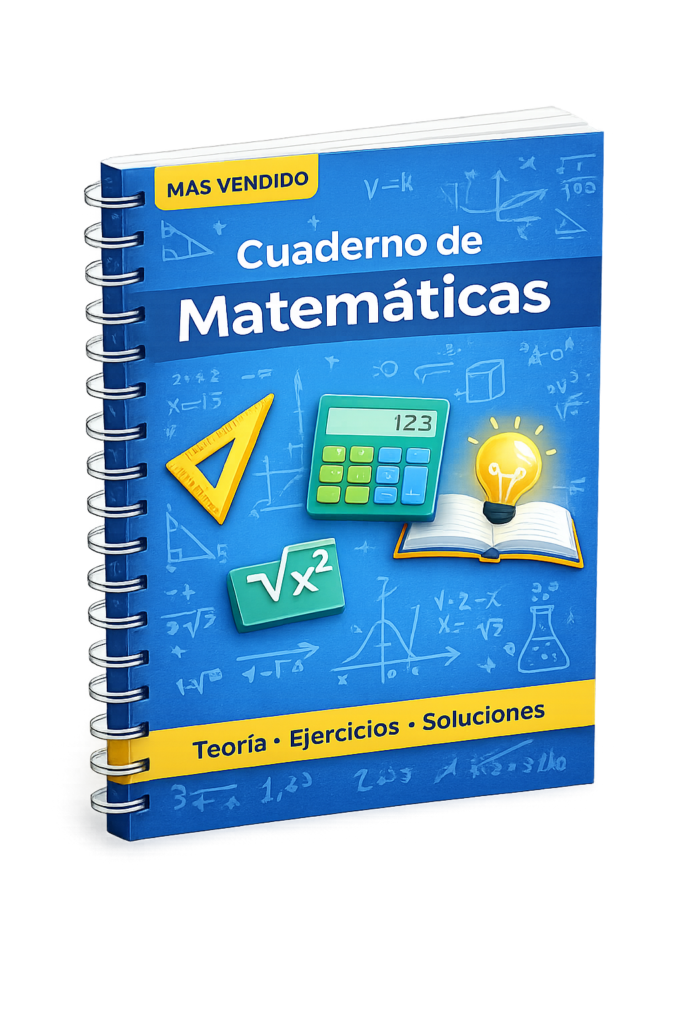
Packs de fichas
Cientos de fichas listas para imprimir, organizadas por asignaturas y cursos.
Desde 1.99 €
Recursos Premium
Material exclusivo de refuerzo y exámenes con soluciones
Desde 1.99 €
¿Quieres aprender más rápido?
Suscríbete gratis a nuestra newsletter con el código QR o haciendo clic en el botón rojo y recibe recursos educativos, ejercicios, exámenes…
Sin spam. Cancela cuando quieras.

TeAyudoAEstudiar
Plataforma educativa para Primaria, ESO y docentes.
Asignaturas
Matemáticas
Inglés
Lengua
Ciencias Sociales
Recursos
Fichas
Exámenes
Juegos educativos
Recursos Premium
Empresa
Sobre nosotros
Aviso legal
Privacidad
Contacto
© 2026 TeAyudoAEstudiar · Todos los derechos reservados.
Creado por docentes🧡 para ayudarte a aprender.